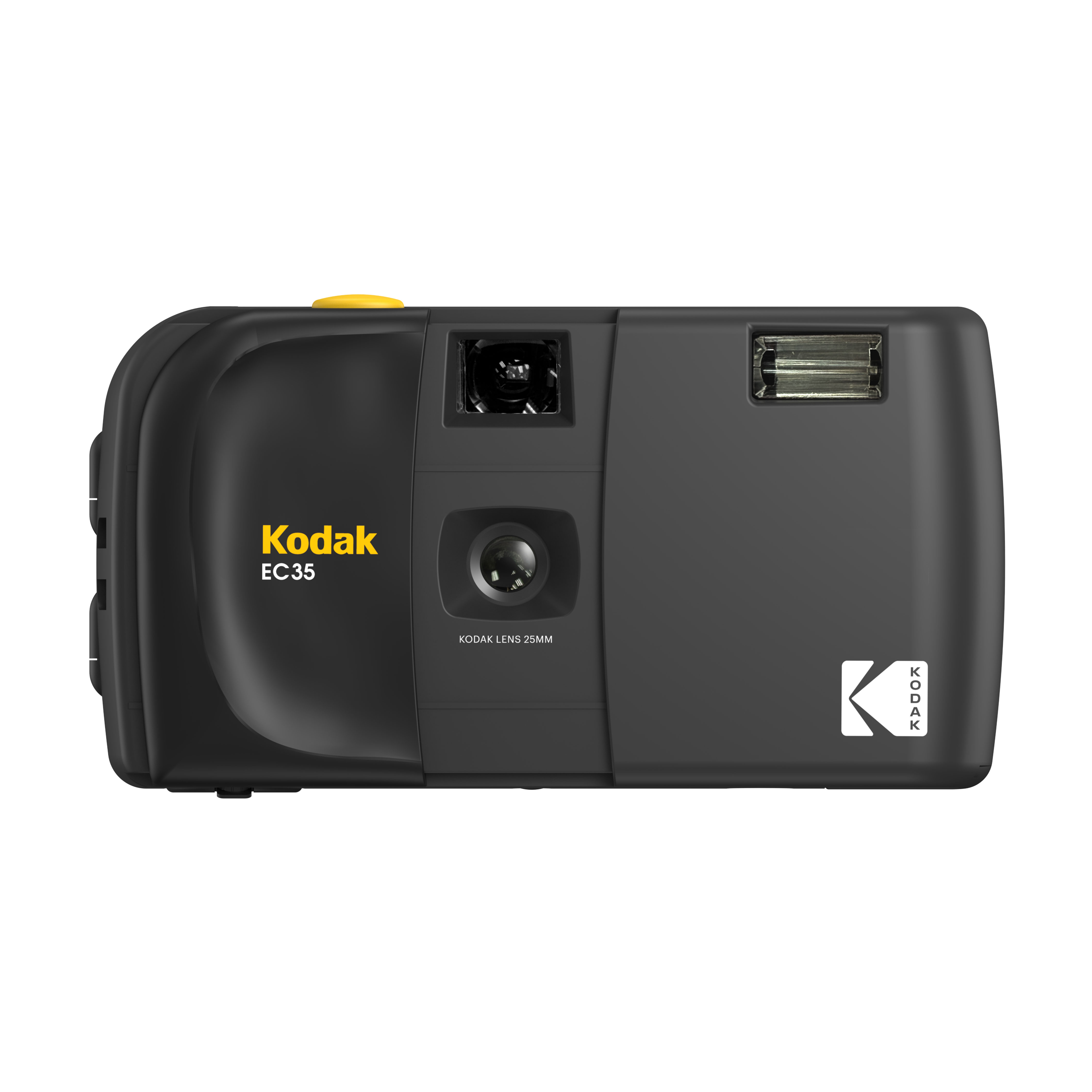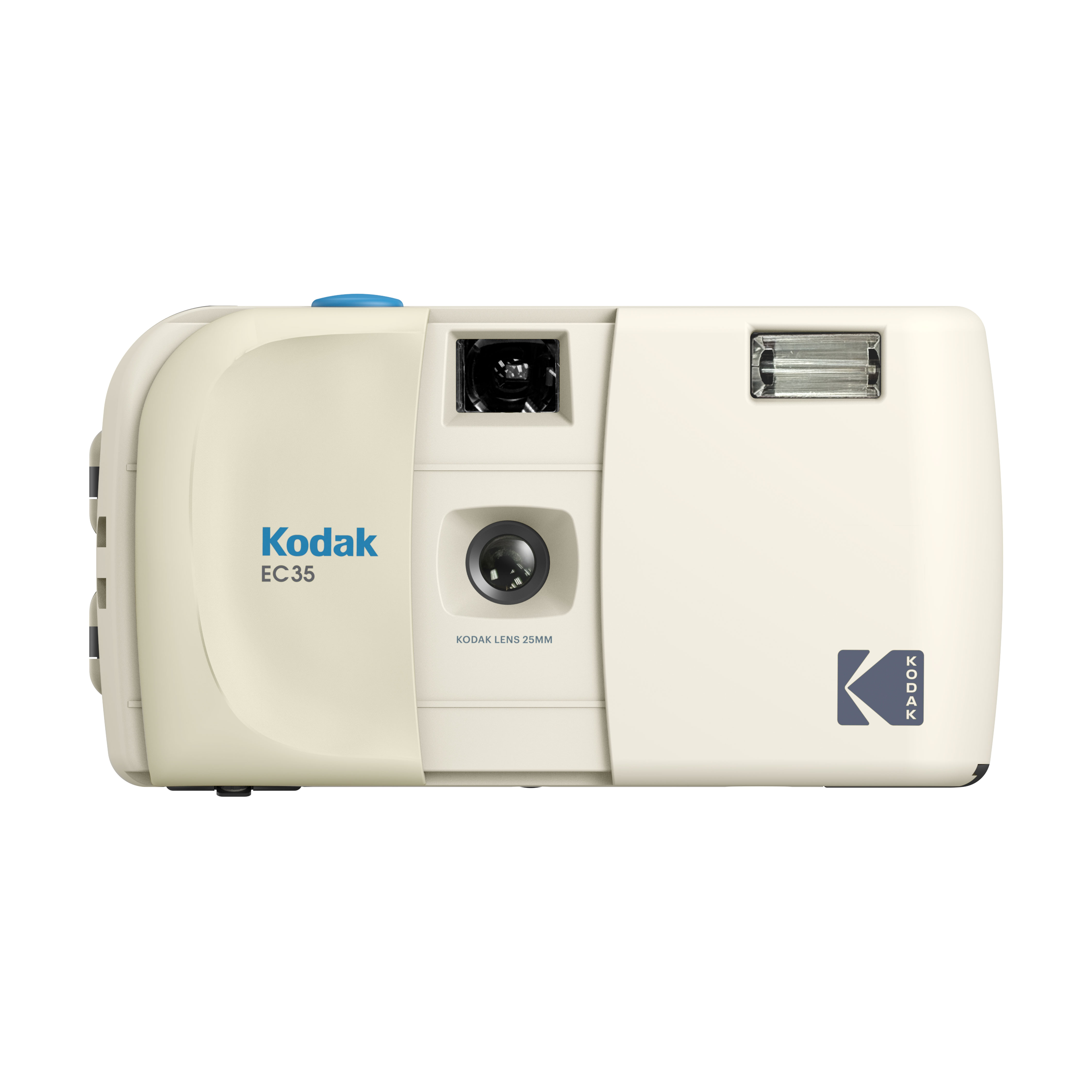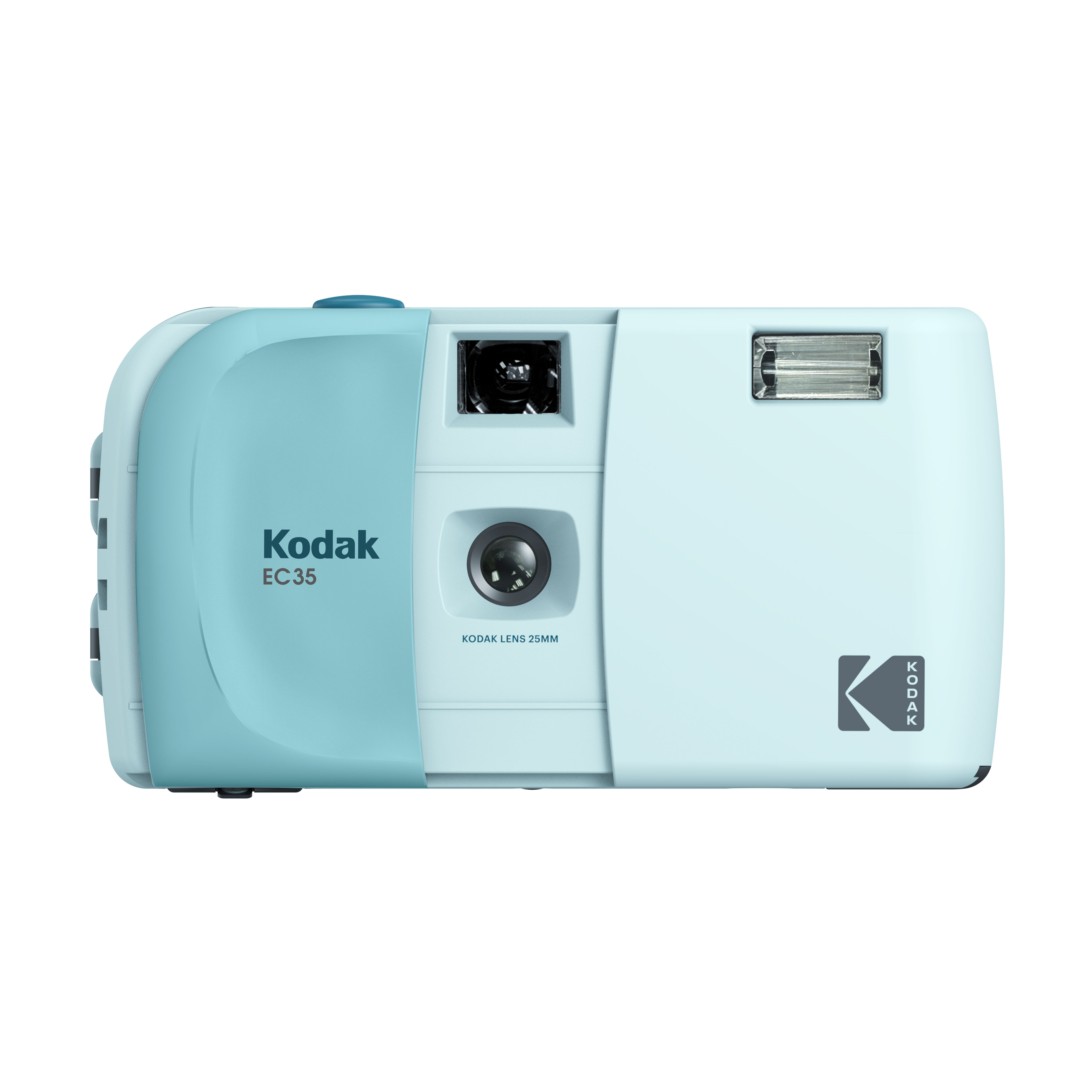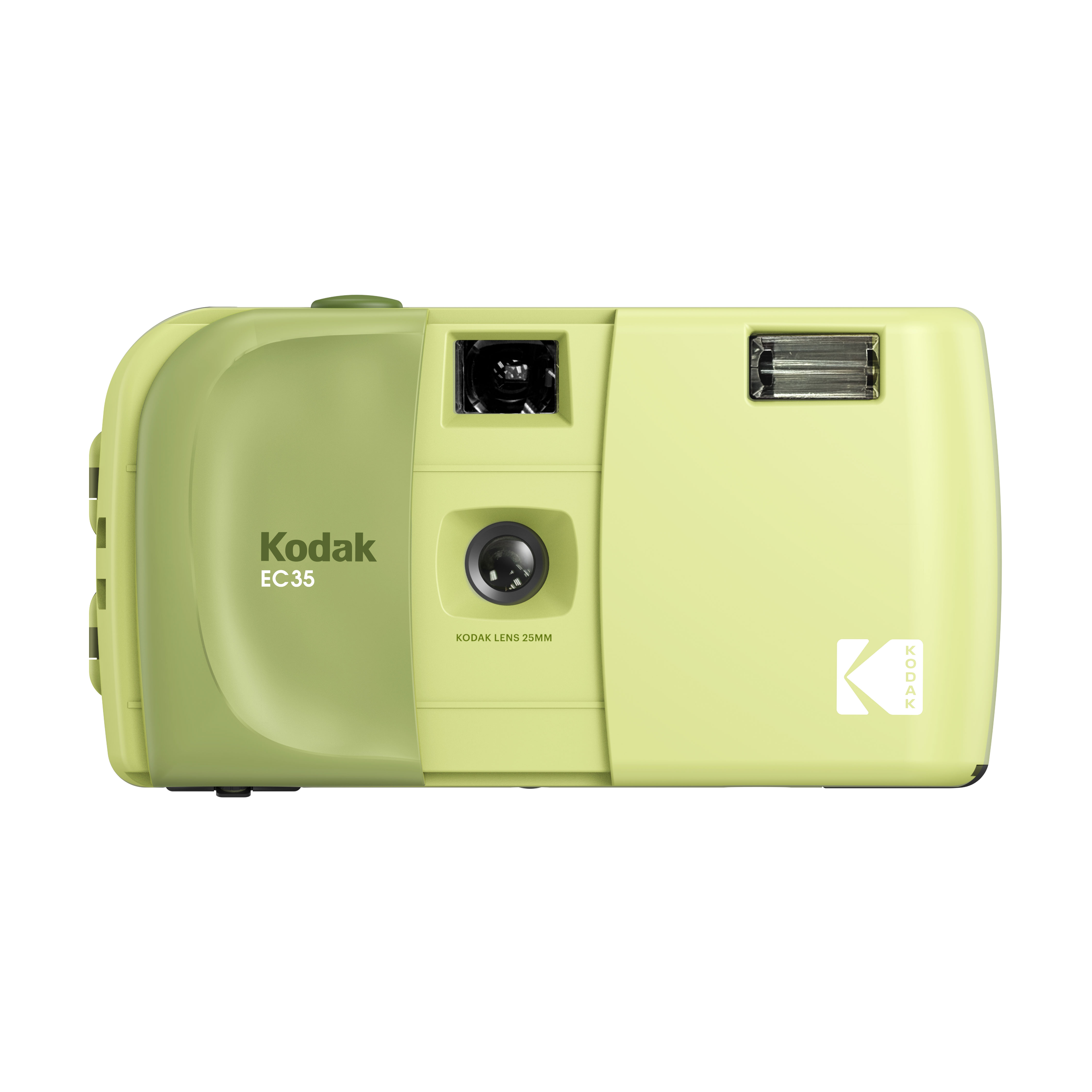
Kodak Snapic A1 35mm Film Camera - Ivory White
35mm Film Camera
Delivery & collection
- Pickup from store (Stuart Cameras), WhitechapelStuart Cameras, 221 Whitechapel Road, London E1 1DE, United Kingdom · 9AM – 6PM Mon-SatFree
- Standard shipping (Small item), UK only4-5 working days£3.99
Pick pickup or delivery at checkout. Standard shipping is free on baskets of £100 or more. If your basket has several things in it, you pay one shipping price, never one per item. Changed your mind? You have 14 days from receiving it to return it — see our delivery & returns page.
Kodak Snapic A1 35mm Film Camera with 25mm f/9.5 3-Element Glass Lens
The Kodak Snapic A1 is a modern reusable 35mm film camera designed to combine straightforward operation with useful automatic features. It is equipped with a 25mm f/9.5 three-element glass lens, providing a wide field of view well suited to travel, street photography, groups and everyday snapshots.
A simple two-zone manual focusing system lets you switch between close subjects and more distant scenes, while the fixed 1/100-second shutter keeps operation uncomplicated. The Snapic A1 also offers automatic film loading and advance, automatic rewind, built-in auto flash with red-eye reduction and a creative double-exposure function.
Compact and lightweight, it is an excellent option for beginners, casual photographers and anyone wanting a reusable alternative to a disposable film camera.
Key Features
Camera Type: Reusable compact 35mm film camera
Film Format: Standard 35mm / 135 film with 36 × 24mm frames
Lens: 25mm f/9.5 three-element glass lens
Focusing: Manual two-zone focus – approximately 0.5–1.5m and 1.5m to infinity
Shutter: Fixed 1/100 second
Flash: Built-in flash with Off, On and Auto Flash modes plus red-eye reduction
Film Transport: Automatic loading, film advance and automatic/forced rewind
Creative Feature: Double exposure for up to two exposures on one frame
Power: 2 × AAA alkaline batteries
- A camera pouch and a neck strap are included
- Auto loading and advance
- 25mm; 3-element glass lens
- Auto or force rewind
- Manual 2-zone focus
- Built-in Flash
- 2*AAA Alkaline Battery
- Dimensions 118(W) x 62(H) x 35(D) mm
Watch the video
Video not playing? Watch it on YouTube
Specifications
- Type
- Point & Shoot
- Format
- 25mm f/9.5 3-element glass lens
Questions about this product
Which Film Does the Kodak Snapic A1 Take?
The Kodak Snapic A1 uses standard 35mm / 135 film. You can use both colour negative film and black & white film, giving you plenty of choice depending on the photographic style you prefer. For general everyday use, ISO 400 film is the best all-round choice. It gives useful flexibility when moving between sunshine, cloudy conditions and shade. ISO 100 or ISO 200 film works particularly well when most of your photography will be outdoors in bright daylight. Higher-speed films such as ISO 800 can also be useful when available light is weaker, although the built-in flash should still be used for nearby subjects indoors or in dim conditions. Popular choices include Kodak Gold 200, Kodak UltraMax 400, Ilford HP5 Plus 400 and other standard 35mm colour or black & white films.
Why Choose the Kodak Snapic A1?
Choose the Kodak Snapic A1 if you want something easier than a traditional manual film camera but more capable and reusable than a disposable camera. One of its strongest features is the three-element glass lens. Many inexpensive reusable film cameras use very simple plastic optics, whereas the Snapic A1 uses a glass optical design intended to provide better clarity and detail. The 25mm wide-angle focal length makes it especially practical for holidays, group photographs, street scenes and landscapes. Automatic film loading, advancing and rewinding also removes much of the manual handling normally associated with 35mm cameras. After each photograph, the camera advances the film automatically, and it rewinds the roll at the end. The two-zone focusing system keeps photography simple while still giving you more control than a completely fixed-focus camera. Another standout feature is double exposure, allowing you to combine two different scenes on a single frame for creative analogue effects.
Shooting Tips
Start with ISO 400 film. It is the most versatile choice if you expect to photograph in a mixture of lighting conditions. Use ISO 100 or 200 in bright sunshine. Slower film is a good option when you will mainly be photographing outdoors in strong daylight. Remember to select the focus zone. Use the close setting for subjects approximately 0.5–1.5 metres away and the distance setting for subjects from around 1.5 metres to infinity. Use the flash indoors. The fixed f/9.5 aperture means the camera needs plenty of light, so flash is important for many indoor photographs. Try Auto Flash mode. This allows the camera to activate the flash when it detects that additional light is required. Keep flash subjects relatively close. The built-in flash is designed for nearby people and objects rather than distant buildings or landscapes. Take advantage of the wide lens. Move closer to your subject when you want people to appear larger in the photograph. Experiment with double exposures. Try combining a portrait with a textured wall, trees, signs, architecture or another contrasting scene. Hold the camera steadily. The shutter operates at a fixed 1/100 second, so a stable grip will help maximise sharpness. Let the camera advance the film automatically. There is no need to manually wind the film after each photograph. Allow the camera to rewind at the end of the roll. Wait until the automatic rewind has completely finished before opening the film door. Use the forced-rewind function when necessary. This allows you to rewind a partially used roll before reaching the final frame. Carry spare AAA batteries. The automatic film transport and flash rely on battery power. Keep the lens clean. Fingerprints and dust on the front glass can reduce contrast and image clarity. Develop the film after shooting. Colour negative film normally requires C-41 processing, while traditional black & white films require appropriate black & white development.
Customer reviews
No reviews yet.
You might also like